If there is one thing that defines the gastronomic experience in Spain, it is the custom of sharing. Sitting at a table, ordering a snack and letting the conversation flow around the food is part of our way of enjoying ourselves. But when we talk about bars and informal gastronomy, words like pintxos, tapas and raciones are often used interchangeably. Although they have points in common, they do not mean exactly the same thing.
In this article we explain in a simple way how they differ, so that the next time you visit a tapas bar in Malaga you know what to order and what to expect from each option.
What is a lid. The tapa is probably the best known of the three. It is a small portion of food, designed to accompany a drink or to taste several flavours without the need to order a full plate.
Its origin is closely linked to Spanish hospitality tradition. In fact, one of the most popular theories says that it emerged as a literal “tapa” that covered the glass to protect the drink from dust or insects. Over time, this small portion evolved to become a hallmark of Spanish cuisine.
Tapas tend to be varied: from Russian salad or olives to croquettes, anchovies or a portion of omelette. They are usually small in size and their main function is to invite you to nibble, share and continue enjoying the bar experience.
What is a ration. The portion is the most abundant of the three options. If the tapa invites you to nibble and the pintxo to taste, the ración is designed to be shared more calmly. It is usually presented on a plate or platter and is larger in size, ideal for several people or for those who want to eat something more complete.
A portion can be squid, patatas bravas, salad, ham, cheese, fried fish or any dish that, in a generous format, is served to share. It is a very common formula in bars and taverns because it allows you to enjoy the cuisine in a group without having to order individual dishes.
In a tapas bar in Malaga, raciones are usually a perfect option to accompany a drink with a more substantial meal, especially if it is to be shared with friends or family.
Main differences. Although all three formats are part of Spanish gastronomic culture, their differences are quite clear:
- The tapa is a small portion, designed to accompany a drink or snack.
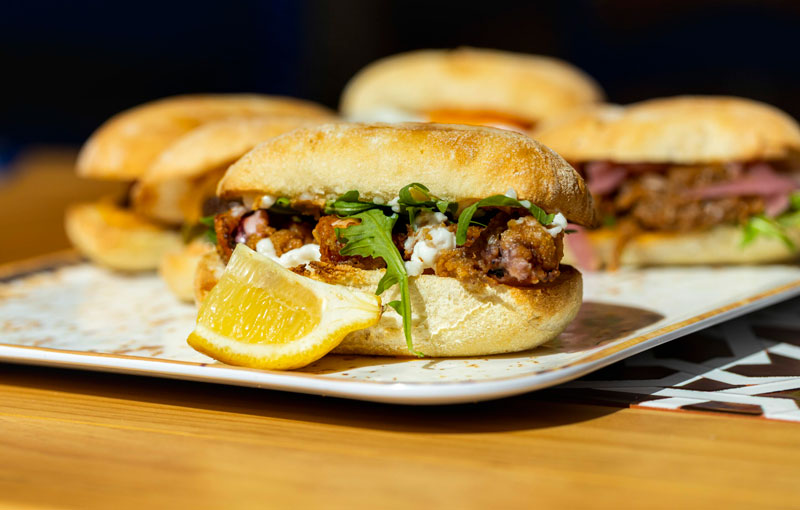
- The pintxo is usually served on bread and stands out for its most characteristic presentation, especially in the north of Spain.
- The portion is a larger quantity, ideal for sharing as a main dish or as a complement to the meal.
Another important difference lies in regional customs. While the tapa is widespread throughout Spain, the pintxo is more typical of the Basque Country and nearby areas. The ración, on the other hand, is a universal format in bars all over the country.
In a nutshell. Knowing how to differentiate between pintxos, tapas and raciones not only helps you to order better, but also to enjoy the gastronomic experience more. Each format has its own charm, its own history and its own way of understanding shared cuisine.
So the next time you visit a tapas bar in Malaga, try them all: a tapa to whet your appetite, a pintxo to surprise you and a portion to share without rushing.